
Samuel Kligman and Zach Gardner
Daily Princetonian
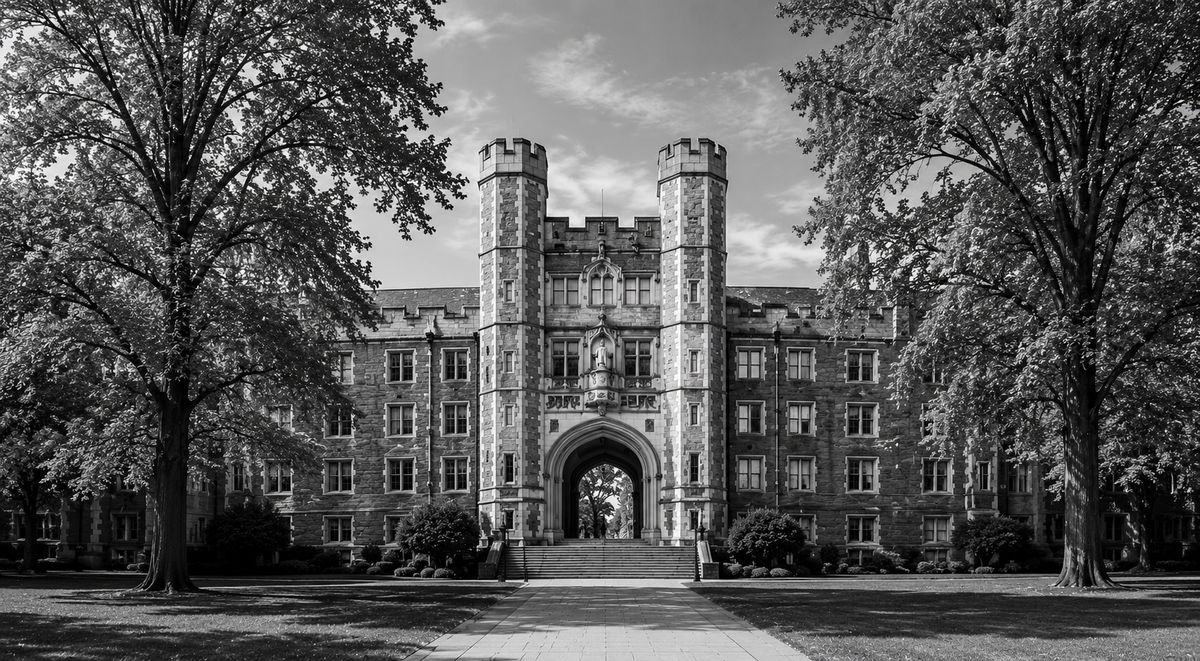
Princeton recently hosted the New Jersey General Assembly for a special session in the Faculty Room of Nassau Hall, celebrating the 250th anniversary of the independent legislature’s first meeting in August 1776. At the time of that inaugural session, Nassau Hall was still unravaged by the horrors of war.
Closing the doors to such historic buildings repeats the mistake made by too many universities: conflating the institution with its administration. While the University could not function without the work of its leaders and trustees, neither could it live without the flesh, blood, and spirit of its students and faculty.
Over the past year, President Donald Trump’s administration has targeted international students in a series of restrictions, citing concerns about national security. Fear has spread among international students at Princeton, where 13% of undergraduates — and 45% of grad students — come from abroad. “This is not the safe haven that it was supposed to be,” B. ’27, a Princeton student from Latin America, told PAW.
The last two years have seen a dramatic increase in the scrutiny of free speech and academic freedom on university campuses, largely in response to the protests that followed the Hamas terrorist attack on Israel and the Israeli invasion of Gaza. There has been important progress during this period that bolsters awareness of the importance of free speech and academic freedom principles.
However, progress on these core values will mean little if there is not a major effort to address a pressing long-term and deeply embedded problem – the almost total lack of viewpoint diversity among faculty at many universities.
At the Sunday Undergraduate Student Government (USG) senate meeting, University administrators spoke about the purpose of campus free expression facilitators, while student groups presented new mental health and menstrual product initiatives.
Associate Dean of Undergraduate Students Garrett Meggs spoke about the University’s free expression facilitators. Meggs explained that the University’s purpose behind the facilitators is to allow students to engage in civil and respectful dialogue on campus. Free expression facilitators are assigned to campus events in order to ensure that speakers and audiences are protecting expression and following the University’s time, place, and manner restrictions.