Your Cart is Empty


July 1, 2025
Dear PFS Subscribers, Members and Friends,
June provides a welcome pause for PFS to try to make sense of a year uniquely disruptive in the history of American higher education. There was no better place to do this than at Heterodox Academy’s third annual conference, Truth, Power and Responsibility, held June 23 - 25 in Brooklyn, New York.
At this head-spinning moment, Heterodox Academy (HxA) is on the march with a clarion call: “It’s choosing time in higher education." Every Princetonian interested in the future of America’s universities can look to HxA as the most important faculty-focused higher education reform organizations in the country. PFS Executive Director Angela Smith and PFS Vice-Chair Leslie Spencer attended the conference, and found invaluable connections and insights for collaborating and helping prioritize PFS’s future. See our Special Feature below
A Special Feature
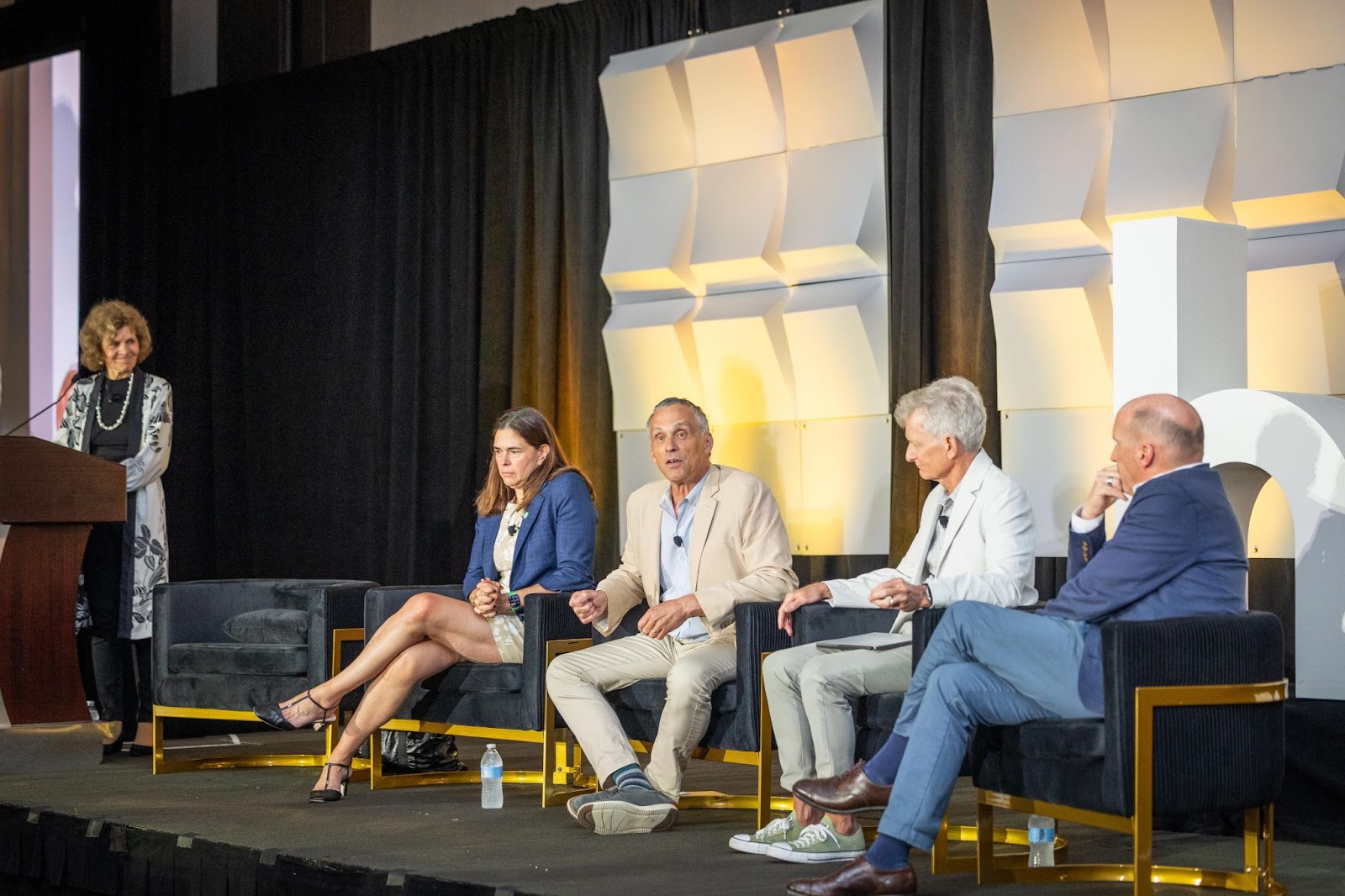
The University Presidents’ mainstage panel, with Sian Beilock (Dartmouth), Michael Roth (Wesleyan), Jeremy Haefner (University of Denver) and Brian W. Casey (Colgate). Moderated by the renowned expert on free speech and constitutional law and former president of the ACLU Nadine Strossen of New York Law School.
Over 400 faculty, staff and other higher education professionals endured the heat dome to attend thirty-six concurrent sessions with titles such as: “STEM Strikes Back: How Elevating STEM Voices Can Restore the Academy’s Reputation”; “The Left-Wing Case for Open Inquiry”; “Persuading Universities to Take Free Expression Seriously”; “Creating a Student-Led Culture of Free Speech Nationwide”; “Challenging the Challengers of Free Speech”; “The Duties and Responsibilities of Scholars”, and “The Role of Legislation in Reforming the Academy.” “Interrogating DEI Presumptions and Practices” was standing room only. And true to HxA’s commitment to viewpoint diversity: “The Skeptics’ Panel” challenged HxA’s mission, arguing that “The HxA Way” undermines open inquiry.
On the mainstage, in “View From the Top: A University Presidential Panel” the Presidents of Dartmouth, Wesleyan, University of Denver and Colgate disagreed sharply about whether the true threat to higher education is coming from internal forces that have gradually corrupted the mission and culture of higher education, or from external political forces, or both. Perhaps their only point of agreement was that being a college president now is a lonely and fraught occupation.
Everywhere was the sense that the future of higher education is on the line, and the stakes could not be higher. HxA President, John Tomasi kicked things off with a stark historical comparison: Could universities be nearing the same abrupt fate as the dissolution of the monasteries during the 16th century Protestant Reformation? Between political vulnerability, the corruption of core mission, betrayal of their own standards, misplaced priorities, skyrocketing tuition costs, the misuse of vast wealth, ideological and compliance-driven bureaucratic bloat, the decline of true liberal education and the rise of student-as-customer credentialing, the lack of alignment with society at large, and critically, the impact of AI – could universities be near the end? For a compelling argument of this grim view, see a recent Substack post by John Carter: The Class of 2026: AI is doing to universities what Gutenberg did to the monasteries. Tomasi countered by unveiling a major new HxA initiative: Open Inquiry U: A Four Point Agenda for Reforming Universities,a must-read that calls on universities to 1) commit to open inquiry, 2) unleash the free exchange of ideas, 3) insist on viewpoint diversity, and 4) invest in constructive disagreement. See our PFS Top Ten for similar action items, aimed at Princeton but applicable to all universities.
Princeton has nascent links to HxA. Twenty-nine Princeton faculty are among the over 4,000 HxA members. A few of them attended PFS’s Reunions ‘25 event, at which HxA President John Tomasi was our featured speaker, in conversation with Princeton politics professor John Londregan. The event is now available on Youtube: Open Inquiry, a New Path Forward - Princeton can Lead.
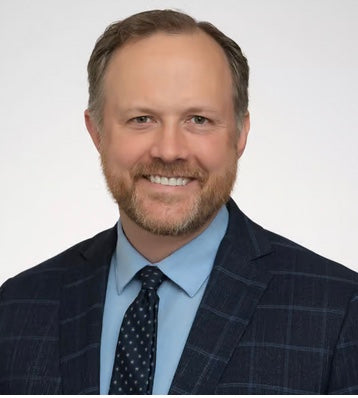
And see our Quote of the Month below from A Chance to Build Rather than Ban: The new civics schools are disruptive misfits. We need more of that, by HxA’s Executive Director Michael Regnier, who happens to be a 2002 graduate of Princeton.

We are delighted to announce PFS’s new contributor Tal Fortgang, ‘17, whose articles you will see roughly once a month: Tal is a legal policy Fellow at the Manhattan Institute and aContributing Writer at The Dispatch. He majored in Politics at Princeton, and earned his JD from New York University School of Law in 2023.
His first article for PFS, What does it mean to Stand Up For Princeton? is a critique of Princeton’s major new campaign to resist the Trump administration’s attack on elite universities.
With President Eisgruber personally leading the academic “resistance” against the Trump administration’s attack on elite universities, Princeton launched a campaign, announced in the Daily Princetonian on May 2, that “encourages alumni, faculty, students, and friends to make their voices heard in support of higher education during this challenging period.” Stand Up for Princeton and Higher Education aims to deputize a cadre of the most influential Americans – Princetonians themselves – who tend to have strong nostalgia for their alma mater, not merely to pay it forward to future Princetonians through donations but to become a kind of political force defending the university in Washington...
The key question Stand Up for Princeton raises lends itself to two answers. In what way should we stand up for Old Nassau? Certainly not by pretending that Princeton is perfect when it is actively violating its own stated bedrock principles. There are alternatives: Advocating for the non-politicized STEM departments to spin off from the rest of the university and reclaim the federal grants they deserve; or pushing Princeton to be worthy of our defense by enforcing its rules consistently, without fear or favor, and ensuring that its liberal arts training truly is in the nation’s service. See the full article HERE.
Student Corner

Khoa Sands ‘26, PFS writing fellow, has challenged New York Times columnist David Brooks in his thought-provoking article: Princeton Should Be More Elitist.
Articles of Interest
What the Right Learned From the Left About Policing Colleges
Donald Trump has co-opted his predecessors’ aggressive approach to civil-rights enforcement on campuses—and taken it even further.
Conor Friedersdorf, The Atlantic, June 29, 2025
How should universities deal with graduate speech malfeasance?
Eric Rasmusen, Heterodox Stem, June 29, 2025
UVA President’s Resignation Reflects a New Front in Trump’s Bid to Remake Higher Education
The school is under pressure to unwind its diversity, equity and inclusion programs.
Douglas Belkin, The Wall Street Journal, June 27, 2025
The Class of 2026
AI is doing to the universities what Gutenberg did to the monasteries.
John Carter, Postcards from Barsoom, Substack, June 10, 2025
Reforming Higher Ed from Within: Restoring Viewpoint Diversity Through Checks and Balances
By Michael Jindra and Jacob Mackey, American Enterprise Institute, June 17, 2025
The Public Needs Campus Viewpoint Diversity
The radical left is a threat to America’s democracy, institutions, and national well-being.
John Ellis, Wall Street Journal, June 16, 2025
Moral Failure and Government Intrusion at Harvard
Michael Poliakoff, Law and Liberty, June 11, 2025
The Power of the Classroom
Political threats remind us of our professional duties as educators.
Nicole Barbaro Simovski, Inquisitive, June 2, 2025
Quote of the Month
Michael Regnier, Princeton ‘02 and Executive Director of Heterodox Academy
If higher education is to recover its vitality and regain public trust, it must reform itself through academic means: by creating space for overlooked questions, welcoming a greater range of intellectual traditions, and building institutions capable of genuine scholarly pluralism.…
The new centers won't fit easily into existing disciplines and rankings. They won't be the cool kids with fashionable arguments. But they represent an academic solution to an academic problem, and a model for the kind of productive disruption higher education desperately needs.
Michael Regnier, Free the Inquiry: The Low Down on Higher Ed from Team HxA, June 10, 2025

The academic year is at an end, but two major studies are keeping higher education in the spotlight:
New FIRE study finds narrowing range of political views among faculty donors
The study finds that donations to political candidates from faculty at top universities have become increasingly one-sided, with the range of opinion becoming concentrated on the left.
PFS’s response, How does Princeton Compare? explains Princeton’s ranking of 13 out of the 55 university faculties studied.
The second study, drily entitled “Report on the State of Scholarship in the Humanities and the Humanistic Social Sciences” has set off a firestorm of reaction among humanities faculty and professional organizations such as the American Association of University Professors (AAUP).

On Sunday, May 24, Princetonians for Free Speech (PFS) hosted a breakfast at the Nassau Inn — and despite dreary skies outside, the energy inside couldn't have been brighter. About 70 alumni, current students and other free speech supporters turned out for what proved to be an engaging and inspiring morning.
PFS leadership set the stage with organizational updates from Co-founder Ed Yingling '70, President & CEO Todd Rulon-Miller '73, and Executive Director Angela Smith — including the exciting news that PFS has grown to over 26,000 email subscribers (20,000 of whom are Princeton alumni). This represents remarkable growth from just 1,400 two years ago, showing a momentum that was on full display during this packed event.

PFS’s featured editorial this month is Yale Issues clarion call for change, joining other leading universities. Where is Princeton? We put Yale’s report in the context of the growing consensus amongst a widening circle of University Presidents that President Maurie McGinnis is correct. University leaders must take responsibility for their role in reaching this critical point. President Eisgruber is not among this list of reformers.
If you want to know more about why Princeton is not leading this movement to restore trust in higher education,link here to a comprehensive Five-Part Review of President Eisgruber’s book, Terms of Respect, How Colleges Get Free Speech Right, written for PFS by Tal Fortgang ‘17.