

This Week in History: Debating the role of interdisciplinary humanities in a Princeton education

Yi (Chris) Xin February 25, 2026 1 min read

This Week in History: Debating the role of interdisciplinary humanities in a Princeton education

Yi (Chris) Xin
Daily Princetonian

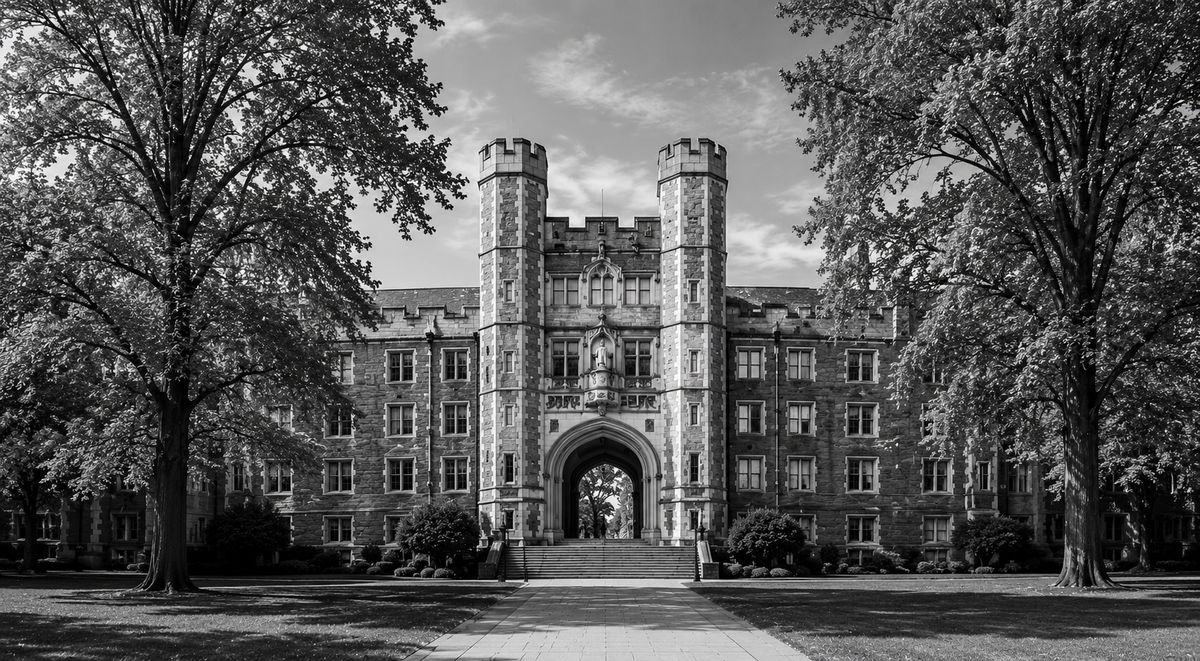
89 years ago, the pages of the ‘Prince’ featured a series of lively debates in the “To the Editor” section about the future of the humanities curriculum at Princeton. One of the central issues of the debate, as Wallace Irwin Jr. ’40 wrote in his letter to the editor on Feb. 22, 1937, was striking a balance between the breadth of humanistic disciplines and the realistic limit of students’ time.

Irwin’s letter was a direct response to Temple Fielding ’39, who, just a few days prior, wrote a proposal for a drastic curricular change and published it in the ‘Prince.’ Fielding suggested a course combining content from different academic departments, offering undergraduates an interdisciplinary exploration of various cultural fields. 
Click here for link to full article 


Leave a comment

Comments will be approved before showing up.


Also in Princeton Free Speech News & Commentary

The interview that exposed academia’s cluelessness

By Megan McArdle July 27, 2026 1 min read

Megan McArdle argues that Carolyn Rouse — Princeton anthropology professor and AAA president — badly botched a Chronicle of Higher Education interview meant to rebut a Vanderbilt/WashU report accusing anthropology of suppressing dissent on politically charged topics. McArdle uses the episode to argue academia has grown accustomed to speaking only to itself, at a moment when public trust in higher ed is collapsing — and that unless it repairs its credibility, financial consequences will follow reputational ones.

Read More
Civic Education Centers Are Booming. The AAUP Wants Them Gone.

By Tal Fortgang ‘17 July 14, 2026 6 min read

Faith in higher education continues to plummet, and the American Association of University Professors (AAUP)—the nation’s leading organization representing faculty interests and a longstanding voice on academic freedom and university governance—has decided to train its guns on the growing movement to establish civic education centers at public universities. The AAUP’s objections amount to a single, unlovely demand: we get to decide what students learn, and nobody else gets a vote.

Read More
Is Anthropology Hopelessly Politicized?

Stephanie M. Lee July 14, 2026 1 min read

Six days after the report went online, the AAA fired back with a full-throated defense. “Anthropologists welcome rigorous critique of the discipline,” wrote its president, Carolyn M. Rouse. “What we cannot accept is a sweeping verdict about anthropology’s intellectual culture, scholarly practices, and professional norms built on selective evidence and issued without consultation. 

Read More