


Alexcis Johnson
‘26
Just how much does free speech cost?
Last year at an event hosted by the DC Center of Princeton’s School of Public and International Affairs (SPIA), the host of NPR’s “Weekend Edition Sunday” Ayesha Rascoe asked President Eisgruber if today’s students are “fragile flowers who can’t deal with anything challenging their preconceived notions?” In response, Eisgruber shared that he in fact has observed quite the opposite.
The truth about free speech on college campuses and in civic discourse in American society is more complex than individuals’ inability to handle opposing viewpoints. In reality, it is external complications that influence whether an individual decides to speak openly about a belief or position they hold. Students and leaders are consistently weighing whether openly expressing their opinion is worth the political, social, or financial repercussions that could arise as a result.
In Terms of Respect: How Colleges Get Free Speech Right, President Eisgruber challenges Rascoe’s characterization of free speech by reframing it through the lens of academic freedom. He argues that academic freedom is essential to fulfilling a central mission of American universities: the pursuit of knowledge and truth through research. I agree with Eisgruber’s proposition that free speech on college campuses and in American civic society at large brings challenges that complicate how students and institutions express their positions.
One such challenge that is particularly relevant for college students is the decision to either express one’s genuine opinions or echo the professor’s sentiments in precept discussions for the sake of earning high marks in a course. My sophomore year, I took a SPIA class on race and public policy, and one of the topics of conversation was whether or not the U.S. government owes African Americans reparations for the enslavement of their ancestors and slavery’s lasting social and economic consequences, and if so, what those reparations should look like. It was clear from the professor’s presentation of the topic that he thinks there is no clear solution. In this case and in many other sociopolitical classroom discussions, students must choose between whether to agree with the professor to increase chances of earning an A in the course or to feel free to think critically and share their own response in order to potentially probe the fostering of new ideas.
Another complicating factor shaping how students on campus engage with free speech is political self-censorship. At a CBS Sunday Morning interview promoting his book, Eisgruber shared that he read a statistic from a Johns Hopkins poll showing that about half of Republicans and half of Democrats think that individuals in the opposing party are “evil.” He made the point that with such a perception, individuals naturally don’t feel free to speak about their political beliefs because they don’t want to appear “evil” to the person with whom they are conversing. On campus, students often self-censor their political beliefs due to concerns about social perception and how their views may be judged by others. Outside of political clubs on campus, I’ve heard many of my peers in group settings claim that they are “in the middle” politically as opposed to being on the right or the left. When discussing major wars such as the Israel-Palestine conflict, many students either decline to comment on the war or they say that they are Pro-Palestine because that is the most socially applauded position. However, in smaller friend groups, students are more likely to share whether or not they are actually on the political left or right. As for war conflicts, although many students censor their genuine position, and often everyone appears to be on the same side, the fact that a debate over which nation to support even exists is proof that individuals hold a wide range of beliefs, even if these beliefs are largely concealed.
On campus, political censorship stems from a desire for acceptance into friend groups, social clubs, and an ability to network and find a job post-graduation. I think many students view remaining neutral as the best way to strengthen relationships. While it’s ironic that stronger relationships derive from lack of understanding of the other person’s true stance, it is a practice that helps students advance socially. From the outside perspective, it may appear that students are simply afraid of free speech, or they fear opposition. But the reality is rooted in preserving access to opportunities and favorable public perception. For international students, the risk of expressing true political beliefs is even greater, as many fear putting their visa status in jeopardy if they speak publicly on hot-button American political issues, and share a sentiment that doesn’t align with the most favored opinion.
A third complicating factor making students pause when deciding to speak freely is whether higher education funding for their institution could be halted. In Eisgruber’s 2026 “State of the University” letter, he shares that “long-term rates of return are steadily declining across university endowments.” Coupled with the endowment tax and the Trump administration’s threat to withhold funding for some of the nation’s wealthiest universities if they do not comply with federal demands, universities and students walk a fine line between speaking out and losing access to millions of dollars in financial aid to students and to fund research with the potential to save lives. While all academic institutions want to maintain their independence and govern their school in alignment with their mission and values, speaking out freely in support of this independence doesn’t always occur if the consequences may mean less funding, especially at peer institutions that are not as wealthy as Princeton and Harvard, and therefore require more federal grants to support their operations.
Eisgruber argues that there is a risk whether one speaks up or not. Speaking openly may bring social, academic, or financial repercussions while remaining silent may come at the expense of intellectual honesty. The rewards of free speech include a civic society that encourages individuals to think critically about their values when they encounter opposing ideas, but these benefits bring the risk of funding cuts for universities that challenge government policies and social backlash against individuals who express unpopular views. To navigate this, students and institutions must pause to ask themselves: what is the real cost of free speech and how can we be willing to pay it?
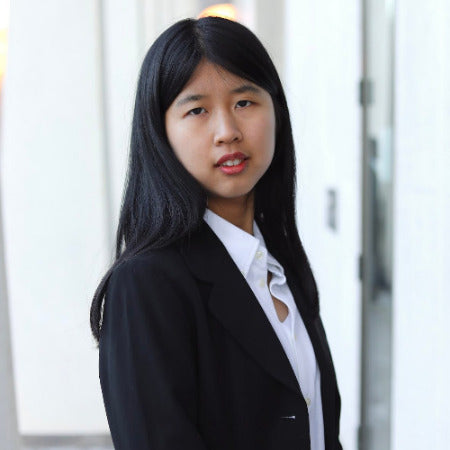
Alexcis Johnson ‘26 is a Princetonians for Free Speech Writing Fellow majoring in neuroscience. She is from Tampa, FL.


Leave a comment
Comments will be approved before showing up.