



Abigail Readlinger
‘27
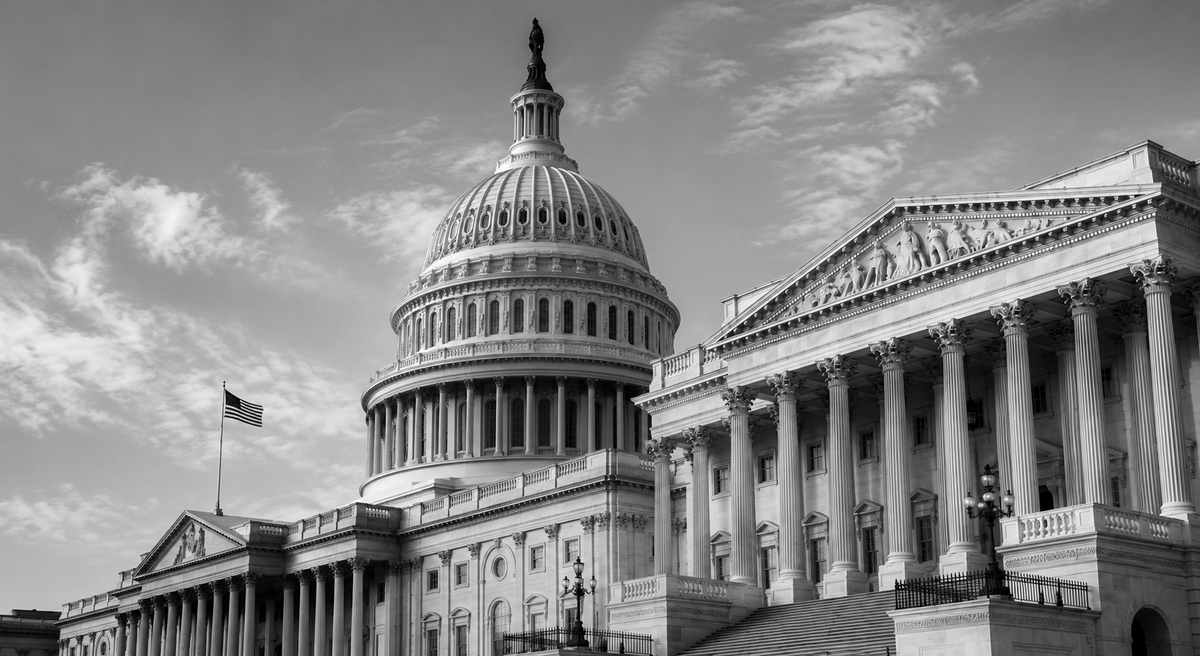
On Friday, January 23, 2026, several students from Princeton University marched to the top of Capitol Hill, joining tens of thousands of Americans in the National March for Life. Originating just months after the legalization of abortion in Roe v. Wade (1973), the National March for Life inaugurated the first major public conversation on the sanctity of life and a constitutional protection of the unborn. Today, four years after the overturn of Roe in Dobbs v. Jackson Women’s Health Organization (2022), the march still serves as a platform for individuals to express their hopes and visions for the future of the Pro-Life movement.
Having experienced the tangible and transformative power of free speech evident in the march, four Princeton students have graciously agreed to share thoughts both about their participation in the march and also about the overall experience with pro-life dialogue on campus.
Nadia Makuc (‘26), Joshua Jen (‘28), Anya Marino (‘28), and Tommy Hasty (‘28) are all members of Princeton Pro-Life. They attended the march last month in an effort to stand up in solidarity with Pro-Life America.
Hasty finds free speech as fundamental to the movement. “We are called to the truth as a society . . . To accomplish this we must be able to freely communicate, debate and discuss . . . Our love and respect for the human person, and consequently their ability to reason for themselves, in union with our recognition of the necessity that society pursue the truth together . . . leads us to hold free speech as a value central to the Pro-Life cause.”
Makuc echoes these sentiments, believing progress is impossible without first the “opportunity to have real dialogue and debate.” This opportunity is not only confined to national initiatives, but rather exists—and must exist—in our everyday lives. She continues, “Especially on a college campus, this is precisely where we should be able to best have an exchange of ideas so that we can better understand each other and find ways forward.”
University life—and Princeton in particular—is a breeding ground for change, as it brings together a beautiful and diverse collection of backgrounds, worldviews, experiences, and convictions. This change, however, can be brought about only in a culture of both genuine and respectful conversation with others.
The question arises: Does Princeton as an institution possess this culture when it comes to the pro-life position? The answer is nuanced. We are certainly not altogether devoid of the qualities necessary for honest debate. Jen is particularly encouraged by the faculty. “I do feel supported as a pro-life student. Every semester, the pro-life club hosts a faculty-student reception, which serves as a visual representation of the number of faculty that support pro-life students on campus.” Marino too ultimately believes that “Princeton University is supportive of free speech.” She also, however, concedes there are still times when she feels uncomfortable and unsupported in the midst of dominant campus ideologies. Makuc, who served as the President of Princeton Pro-Life from September 2023 to January 2025, notes that she was “pleasantly surprised” by her experience, and never faced any “big roadblocks” in her work for the club. “That being said,” Makuc added, “not being prevented from existing is different than being supported.” Hasty agrees, saying he feels “neither entirely support[ed] or condemmn[ed].” He further clarifies, however, that the purpose of the administration is not necessarily to “support students in their views, but to simply maintain a free and respectful place for views to be expressed.” With this definition in mind, he argues the institution does “a good job.”
When asked to consider the same question in respect to the general social culture at Princeton, responses were once again varied. Marino and Makuc are less inclined to express their beliefs outside of an academic setting. “If I run into issues for what I believe in,” Marino explains, “it comes from students.” Makuc relates a similar feeling. “There is an unsaid rule that being pro-life, or doing stuff for the pro-life club is not what you're going to share when you first meet someone here, since it's pretty clear that this is not the most welcome belief.” Hasty too acknowledges a fear of “negative social consequences” when talking to the “wrong person or wrong group.” He also, however, is very optimistic about “speaking to people one on one.” This type of social situation, he continues, “makes for a much more level playing field and people are generally more willing to engage thoughtfully alone rather than when under the influence of a group of peers.”
Much remains to be said about the culture of free speech on our campus. The testimonies of Makuc, Marino, Jen and Hasty reveal several insights into the importance of open dialogue, and the role of universities in encouraging such an environment. What does supporting free speech truly mean? Is it enough for unpopular opinions to simply not be prevented? Is it enough to simply not be condemned? Is it enough to simply maintain free speech in the classroom and risk an oversight of dominating social pressures? These are questions we must consider. For now, one thing is certain. The pro-life movement—while perhaps small—is alive at Princeton, and it has been seen thriving at our nation’s capitol. Its presence is a witness to a culture of free speech. And where improvements must certainly be made, there is much cause for hope.
Abigail Readlinger ‘27 is a Junior in the Politics department from Princeton, NJ. She is a PFS Writing Fellow.


Leave a comment
Comments will be approved before showing up.