

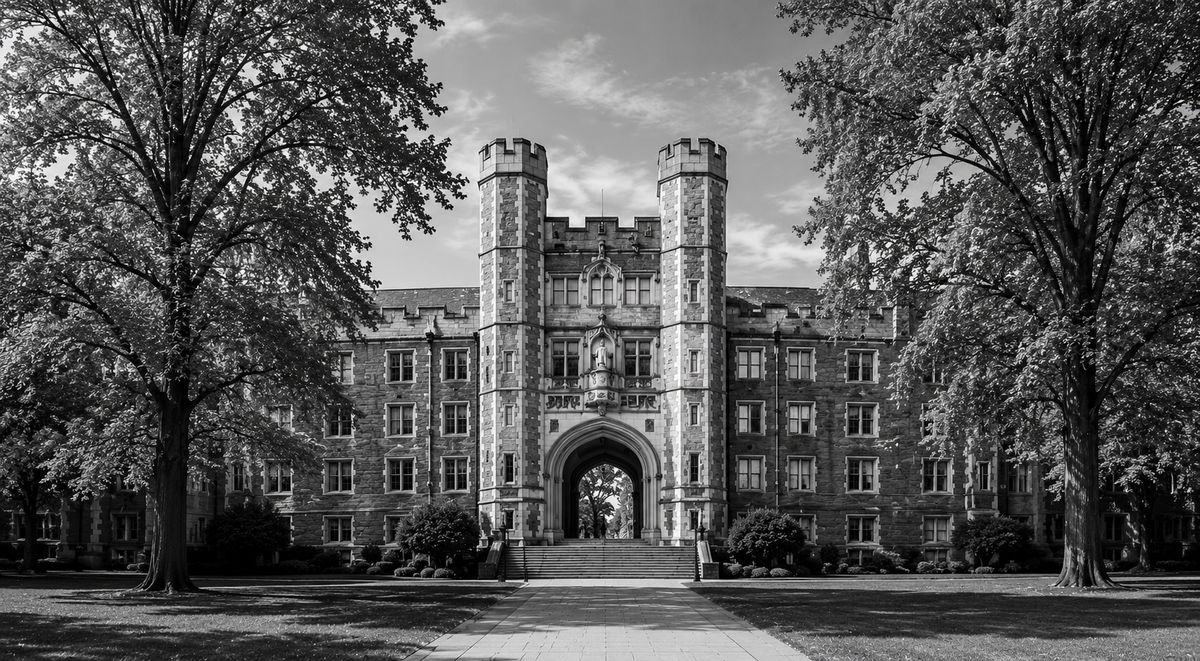
“I’ve had the tremendous privilege of knowing so many fantastic students at Princeton, who I know will become extraordinary military leaders. And I think that it would be a massive shame if that potential was eliminated,” the student said in response to an announcement that Secretary of Defense Pete Hegseth ’03 made on Feb. 27. In a video posted on social media, Hegseth announced that the U.S. Department of Defense (DOD) will end sponsorship for graduate students at Princeton and other Ivy League institutions beginning in the 2026–27 academic year.
University spokesperson Jennifer Morrill wrote in a statement to the ‘Prince’ that there are “a dozen active-duty military graduate students currently enrolled at Princeton, representing all four branches of the U.S. Armed services with all but two of those students enrolled at SPIA.” As the policy currently stands, active-duty service members may be unable to attend Princeton for graduate school while remaining in service.
Megan McArdle argues that Carolyn Rouse — Princeton anthropology professor and AAA president — badly botched a Chronicle of Higher Education interview meant to rebut a Vanderbilt/WashU report accusing anthropology of suppressing dissent on politically charged topics. McArdle uses the episode to argue academia has grown accustomed to speaking only to itself, at a moment when public trust in higher ed is collapsing — and that unless it repairs its credibility, financial consequences will follow reputational ones.
Faith in higher education continues to plummet, and the American Association of University Professors (AAUP)—the nation’s leading organization representing faculty interests and a longstanding voice on academic freedom and university governance—has decided to train its guns on the growing movement to establish civic education centers at public universities. The AAUP’s objections amount to a single, unlovely demand: we get to decide what students learn, and nobody else gets a vote.
Six days after the report went online, the AAA fired back with a full-throated defense. “Anthropologists welcome rigorous critique of the discipline,” wrote its president, Carolyn M. Rouse. “What we cannot accept is a sweeping verdict about anthropology’s intellectual culture, scholarly practices, and professional norms built on selective evidence and issued without consultation.